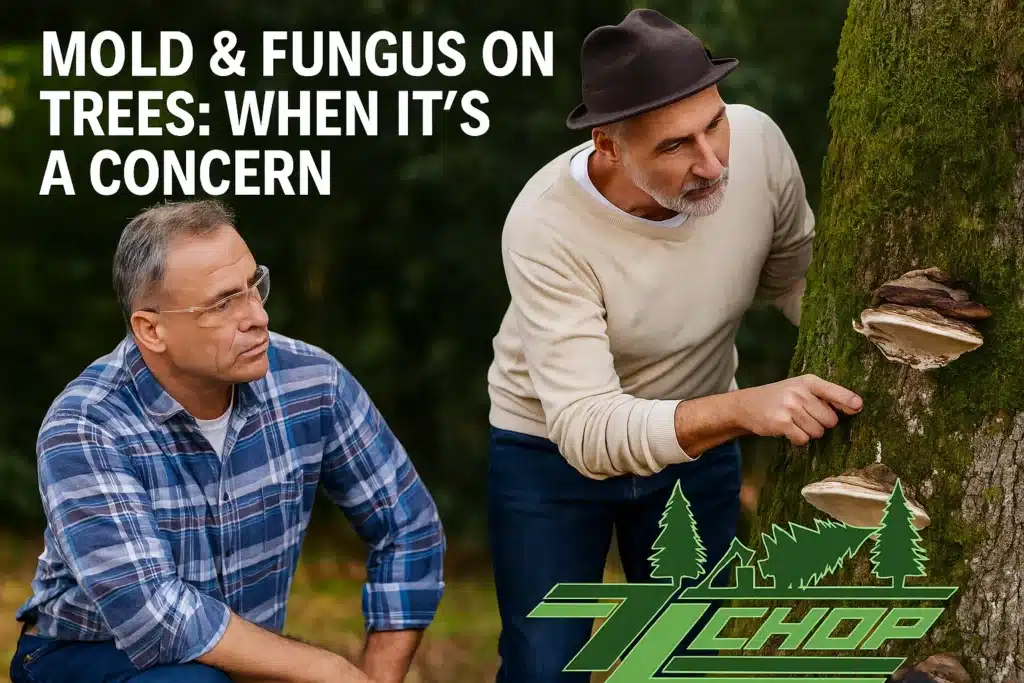
Fungal growth and mold on trees range from harmless surface organisms to clear warnings of internal rot and structural decline. While lichens and some surface fungi rarely harm a living tree, the appearance of mushrooms, shelf-like conks, or repeated sooty/black mold can indicate wood decay or compromised roots that need inspection.
Knowing which signs matter lets you act before the problem becomes dangerous: look for fruiting bodies at the trunk or root flare, rapid canopy thinning, or persistent leaf spotting and dieback – these often point to serious infections that undermine a tree’s core strength. Early identification, proper sanitation, and timely arborist assessment reduce risk and protect landscape value and safety.
What is Tree Fungus?
Tree fungus refers to a wide group of fungal organisms that grow on the bark, leaves, roots, or internal wood of trees. These fungi thrive in moist, shaded environments and reproduce through spores that spread through air, water, or soil. Some tree fungi live harmlessly on the surface, while others invade the inner wood tissues, causing decay, rot, or disease that can weaken the tree’s structure over time.
In many cases, tree fungus is a sign that the tree is under stress — from poor soil drainage, overwatering, damage, or compacted roots. Harmful fungi such as Armillaria (root rot) or Ganoderma (butt rot) can slowly kill a tree if left untreated. Identifying the type of fungus early and addressing underlying causes, like excess moisture or wounds, is essential to preserving the tree’s health and preventing further decline.
How to Treat Fungus and Mold on Trees?
Treating fungus and mold on trees starts with identifying the type and severity of the infection. For mild surface mold or fungal growth, prune and remove infected branches to prevent the spores from spreading. Clean the affected area with a gentle water and baking soda solution, then apply an organic fungicide or copper-based spray to protect new growth. Ensuring proper drainage and reducing excess moisture around the roots also helps limit fungal development and keep the tree’s environment balanced.
For more advanced infections, such as root rot or internal decay, professional arborist intervention is essential. A certified arborist can perform targeted pruning, soil aeration, and systemic fungicide treatments to stop the infection from spreading further. It’s also important to remove decaying wood, dead bark, and leaf litter from around the tree base, as these materials harbor spores. Strengthening the tree with proper watering, mulching, and nutrient-rich soil restoration helps it recover naturally and resist future fungal attacks.
Understanding Fungus and Mold Growth on Trees
Fungus and mold on trees appear when moisture, limited airflow, and decaying organic matter create the perfect breeding ground for spores. These organisms often target stressed or wounded trees, feeding on weakened wood and disrupting water flow. While some surface molds are harmless, persistent fungal growth—like conks, mushrooms, or soft bark—can indicate serious internal decay that threatens the tree’s stability.
- Check bark, roots, and branches regularly for unusual spots or mushrooms.
- Prune dense areas to improve sunlight and air circulation.
- Avoid overwatering or poor drainage around roots.
- Remove dead wood and leaf litter from the area near the base.
- Clean pruning tools to prevent the spread of fungal diseases.
- Apply organic fungicides for early-stage infections.
- Call an arborist if the fungus keeps returning or affects the trunk base.
Is tree Fungus Harmful to Humans?
Tree fungus can sometimes be harmful to humans, depending on the type of fungus and the level of exposure. While most tree fungi are harmless, certain species release spores that can irritate the respiratory system or cause allergic reactions, especially in individuals with asthma or weakened immunity. Understanding which fungi pose risks helps you take preventive measures and maintain a safe, healthy outdoor environment.
- Respiratory Irritation: Some fungi, such as Aspergillus, release airborne spores that can cause coughing, sneezing, and shortness of breath when inhaled.
- Allergic Reactions: Sensitive individuals may experience itching, watery eyes, or skin rashes after contact with moldy tree bark or decayed wood.
- Infections in Vulnerable Individuals: Opportunistic fungi like Cryptococcus gattii can infect the lungs or nervous system, particularly in people with weakened immune systems.
- Toxic Mold Exposure: Certain molds produce mycotoxins that may lead to more severe health problems if exposure is prolonged.
- Environmental Contamination: Decaying trees with fungal growth can spread spores to nearby soil, plants, or indoor spaces, increasing exposure risks.
By identifying and treating fungal growth early, homeowners can protect both their trees and their health. Regular inspections by a certified arborist ensure that harmful fungi are safely removed before they pose a threat.
What are Some Bad Types of Tree Fungus?
Tree fungus can pose a serious threat to the health, safety, and beauty of your landscape. Some fungal infections attack a tree’s roots or trunk, while others spread across leaves and branches, weakening the entire structure over time. Recognizing harmful types of tree fungus early allows you to act quickly with proper pruning, treatment, and soil management to save the tree and prevent the infection from spreading.
Armillaria Root Rot (Honey Fungus)
Armillaria, also known as honey fungus, attacks tree roots and causes decay from the base upward. Infected trees often show yellow leaves, premature leaf drop, and white fungal mats under the bark. This fungus spreads through underground root contact, making it difficult to control once established.
- Remove infected stumps and roots to prevent the spread.
- Improve soil drainage and avoid overwatering.
- Consider planting resistant species in affected areas.
Ganoderma Root Rot (Shelf Fungus)
Ganoderma fungus forms thick, shelf-like growths at the base of trees, indicating internal decay. As it decomposes the heartwood, the tree becomes unstable and prone to collapse. Once visible, the infection is usually advanced and irreversible.
- Inspect tree bases regularly for hard, brown conks.
- Consult a certified arborist for evaluation and removal if needed.
- Maintain soil health and avoid root injury during landscaping.
Anthracnose Disease
Anthracnose causes dark, irregular leaf spots, curling, and premature leaf drop, especially in wet spring conditions. It spreads quickly through splashing rain or wind, stressing trees over time.
- Prune infected branches and dispose of fallen leaves.
- Increase air circulation around the canopy.
- Apply preventive fungicides early in the growing season.
Verticillium Wilt
Verticillium wilt is a soil-borne fungus that clogs a tree’s vascular system, cutting off water and nutrient flow. Symptoms include sudden wilting, branch dieback, and discolored wood under the bark.
- Remove and destroy infected branches immediately.
- Sterilize pruning tools after each cut.
- Add organic compost to improve soil health and encourage recovery.
Powdery Mildew
Powdery mildew looks like a white, powdery coating on leaves and shoots, reducing photosynthesis and slowing growth. It thrives in shaded, humid environments and can quickly spread across nearby plants.
- Prune dense canopies to improve airflow.
- Water trees early in the morning to reduce humidity.
- Apply a sulfur-based fungicide or neem oil as a natural control.
Sooty Mold
Sooty mold appears as a black, sticky film on leaves and branches, caused by insect honeydew buildup. Although it doesn’t directly harm the tree, it blocks sunlight and weakens foliage over time.
- Control sap-sucking insects like aphids or scale using horticultural oils.
- Wash affected leaves with mild soapy water.
- Encourage beneficial insects like ladybugs for natural pest control.
By identifying and treating these harmful tree fungi early, you can protect your trees from irreversible damage. Regular inspections, proper pruning, and maintaining balanced soil conditions are key steps to keeping your trees healthy, resilient, and fungus-free.
Common Causes of Fungal and Mold Growth on Trees
Fungal and mold growth on trees often begins when environmental stress and poor growing conditions weaken the tree’s natural defense system. Factors like excess moisture, poor air circulation, and damaged bark create ideal environments for fungal spores to settle and spread.
Once established, these organisms feed on decaying wood or organic matter, slowly compromising the tree’s health. Identifying these causes early helps prevent long-term damage and promotes stronger, more resilient trees.
- Overwatering or poor drainage: Constantly damp soil encourages root rot and mold formation.
- Wounded bark or broken branches: Open wounds allow fungal spores to enter and infect inner wood tissues.
- Compacted or low-oxygen soil: Restricted airflow around roots reduces their ability to resist fungal attacks.
- Dense canopy and shade: Limited sunlight and high humidity create perfect mold-growing conditions.
- Accumulation of organic debris: Fallen leaves, mulch, and wood chips hold moisture and feed fungal spores.
- Tree stress from drought or pollution: Environmental stress weakens immunity, making trees more vulnerable.
- Improper pruning or lack of maintenance: Neglected trees are more likely to develop fungal infections and decay.
Fungal and mold issues rarely happen overnight—they’re the result of long-term stress or poor site conditions. By managing moisture, improving airflow, and maintaining proper pruning, you can greatly reduce fungal risk and protect your trees for years to come.
What are the Signs Of A Tree Fungus Disease?
Recognizing the signs of a tree fungus disease early is key to preventing long-term damage or even tree loss. Fungal infections often start subtly, showing small changes in leaves, bark, or root health before spreading internally. Homeowners and property managers should watch for visible growths, discoloration, or structural changes that signal decay beneath the surface. Identifying these symptoms early allows for quick intervention and treatment before the disease weakens or kills the tree.
Discolored or Wilting Leaves
One of the earliest signs of fungal infection is leaf discoloration, including yellowing, browning, or dark spotting. As fungi disrupt the tree’s nutrient pathways, leaves may curl, wilt, or drop prematurely. This often happens unevenly across the canopy, with certain branches showing stress first. Persistent discoloration throughout the growing season is a strong indicator of a deeper fungal issue.
Fungal Growth on Bark or Roots
Visible fungal bodies such as mushrooms, conks, or spongy growths on the bark or around the root base are major warning signs. These structures often signal internal decay where the fungus feeds on the wood’s core tissues. Root-based fungi like Armillaria produce honey-colored mushrooms near the trunk, while shelf fungi like Ganoderma create hard, bracket-shaped conks that weaken tree stability.
Cracked, Peeling, or Soft Bark
When fungus invades a tree’s inner layers, the bark begins to show external symptoms like cracking, peeling, or soft, spongy areas. Infected sections may ooze sap or appear darker and damp compared to healthy bark. Over time, the bark may loosen, exposing the decaying wood beneath. These symptoms suggest the fungus has already penetrated deeply into the tree.
Dieback and Dead Branches
Fungal infections often block nutrient and water flow, leading to gradual dieback in branches and twigs. You may notice sections of the canopy turning brown or brittle while other parts remain green. If left untreated, dieback spreads toward the trunk, severely reducing the tree’s vitality. This symptom is especially common in trees affected by vascular fungi such as Verticillium or Ceratocystis.
Root Decay and Instability
Root fungi are among the most dangerous because they attack the foundation of the tree. Signs include soft, discolored roots, poor anchorage, or a sudden lean in the tree’s posture. In severe cases, the tree may topple during strong winds because decayed roots can no longer hold it upright. Detecting root rot early through soil inspection or professional evaluation is crucial for safety.
Unusual Odors or Oozing Sap
Some fungal diseases produce distinct odors or cause the tree to secrete sticky, dark sap. This is often a sign of bacterial and fungal activity breaking down the wood internally. A sour or musty smell near the trunk or base can indicate advanced decay that requires immediate arborist attention.
Conclusion
Fungus and mold on trees can range from harmless natural growth to serious infections that threaten a tree’s structure and lifespan. By learning to recognize early signs—like wilting leaves, soft bark, or visible fungal bodies—you can take action before the damage becomes severe. Regular maintenance, proper watering, and timely professional care are the best defenses against fungal disease.
Healthy trees are less likely to fall victim to decay-causing fungi, making prevention just as important as treatment. Improve airflow, manage soil moisture, and keep your landscape clean to discourage fungal growth. When in doubt, consult a certified arborist to accurately diagnose the issue and ensure your trees remain strong, safe, and beautiful year-round.
FAQS
1. How do you tell if tree fungus is dangerous?
Tree fungus is dangerous if it causes visible decay, soft or hollow wood, or growths like mushrooms and conks on the trunk base—these signs indicate internal rot that weakens structural stability.
2. Can a tree recover from fungus naturally?
Some trees can recover naturally from mild fungal infections with improved airflow, proper watering, and soil health, but severe infections usually require professional fungicide treatment or pruning.
3. What time of year is best to treat tree fungus?
Late winter to early spring is ideal for treating tree fungus, as fungicides and pruning are most effective before new growth and spore release begin.
4. How can I prevent fungus from spreading to other trees?
Remove and dispose of infected branches, sanitize tools after pruning, and avoid overhead watering to stop fungal spores from spreading to nearby healthy trees.